Applied AI Consulting
We find operational inefficiencies and build practical AI-powered workflows that save time, reduce manual work, and improve performance.
Four live pages, each built for a different job: our own proposal builder, a platform, a community brand, and a media brand. What they share is the approach. Private by link or access code where it matters, mobile friendly, in the client's own brand, and where numbers are involved, live enough to pressure-test in the room.
Tap any card to open it. Gated pages ask for a password; we walk through those together.
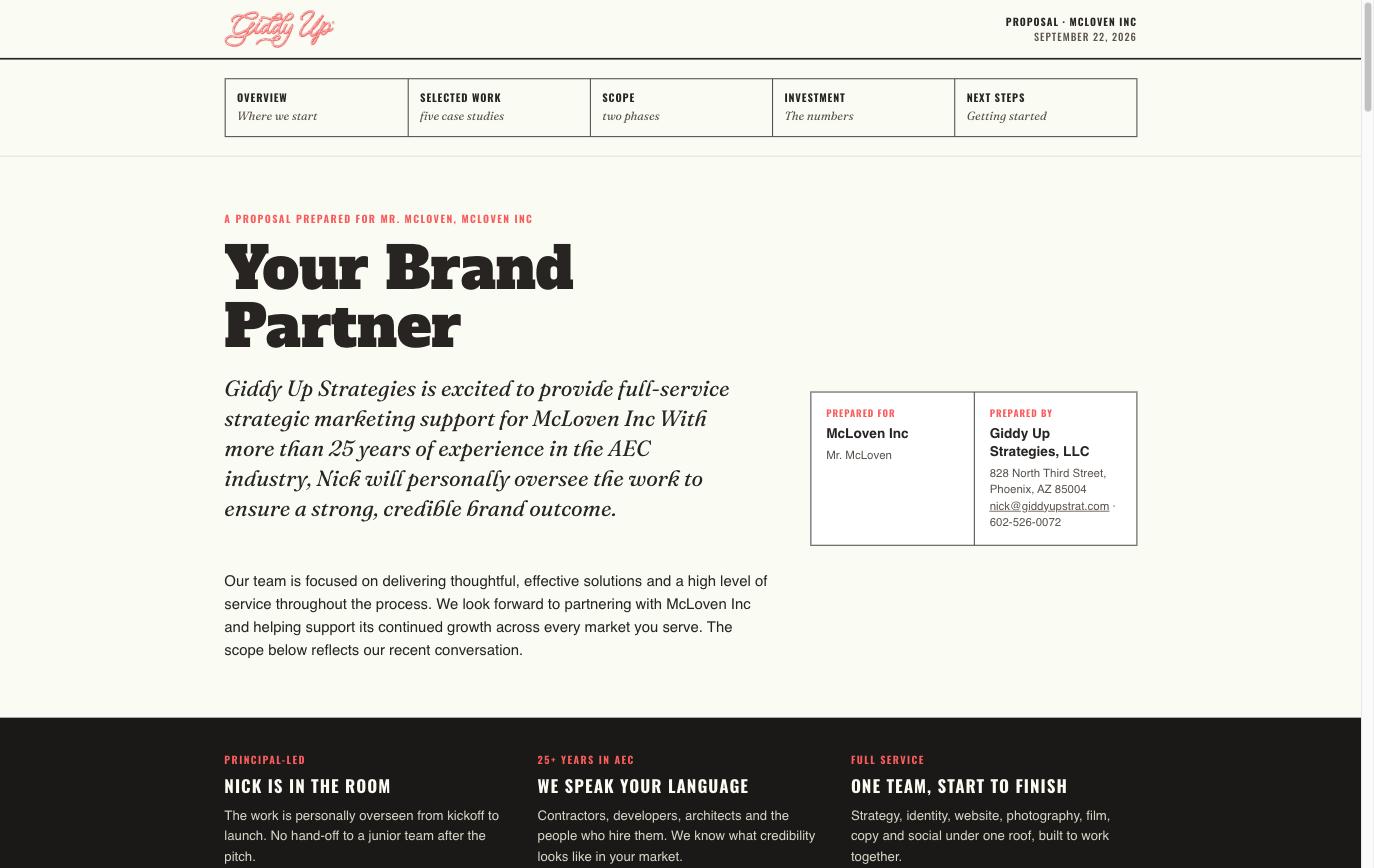
Our own internal tool: pick a client, pick the proof, write the scope once, and a live, on-brand proposal page is ready to send. No template file, no formatting pass.
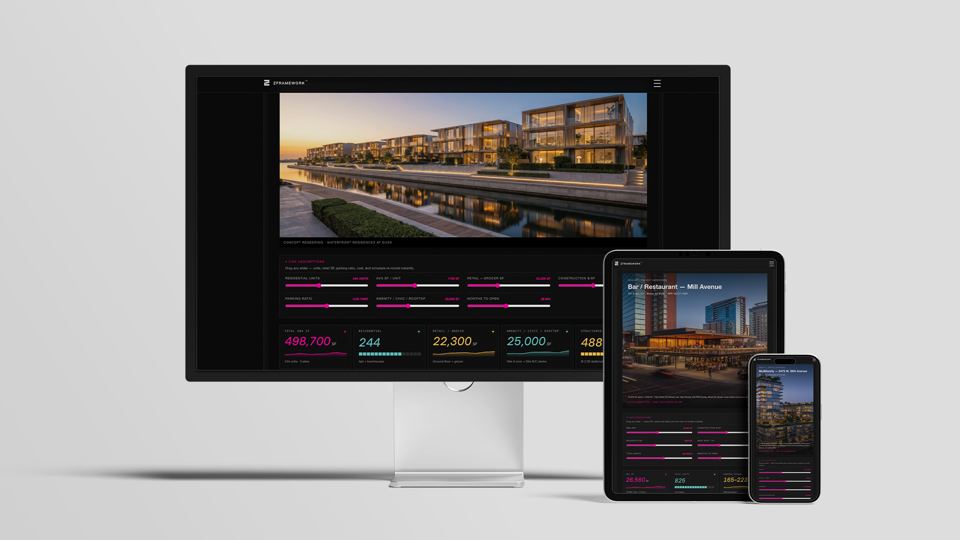
A development intelligence platform site. Three concepts for one parcel, recalculated live as construction cost, rent and exit cap move.
 Password
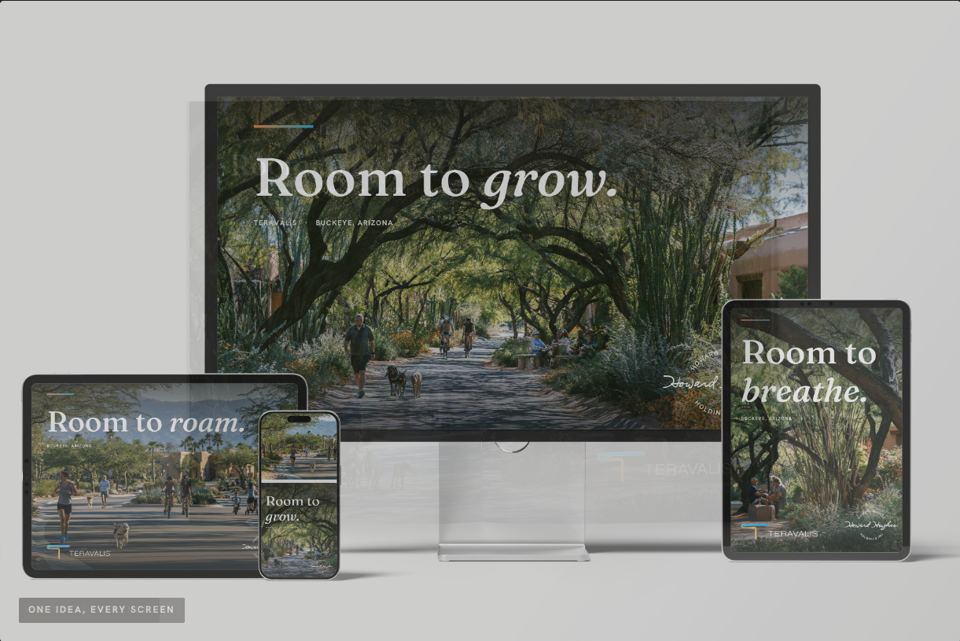
A gated brand pitch for a master-planned community in Buckeye, on its own domain, in the project's own voice. One idea on every screen, nothing to download, nothing to lose track of.
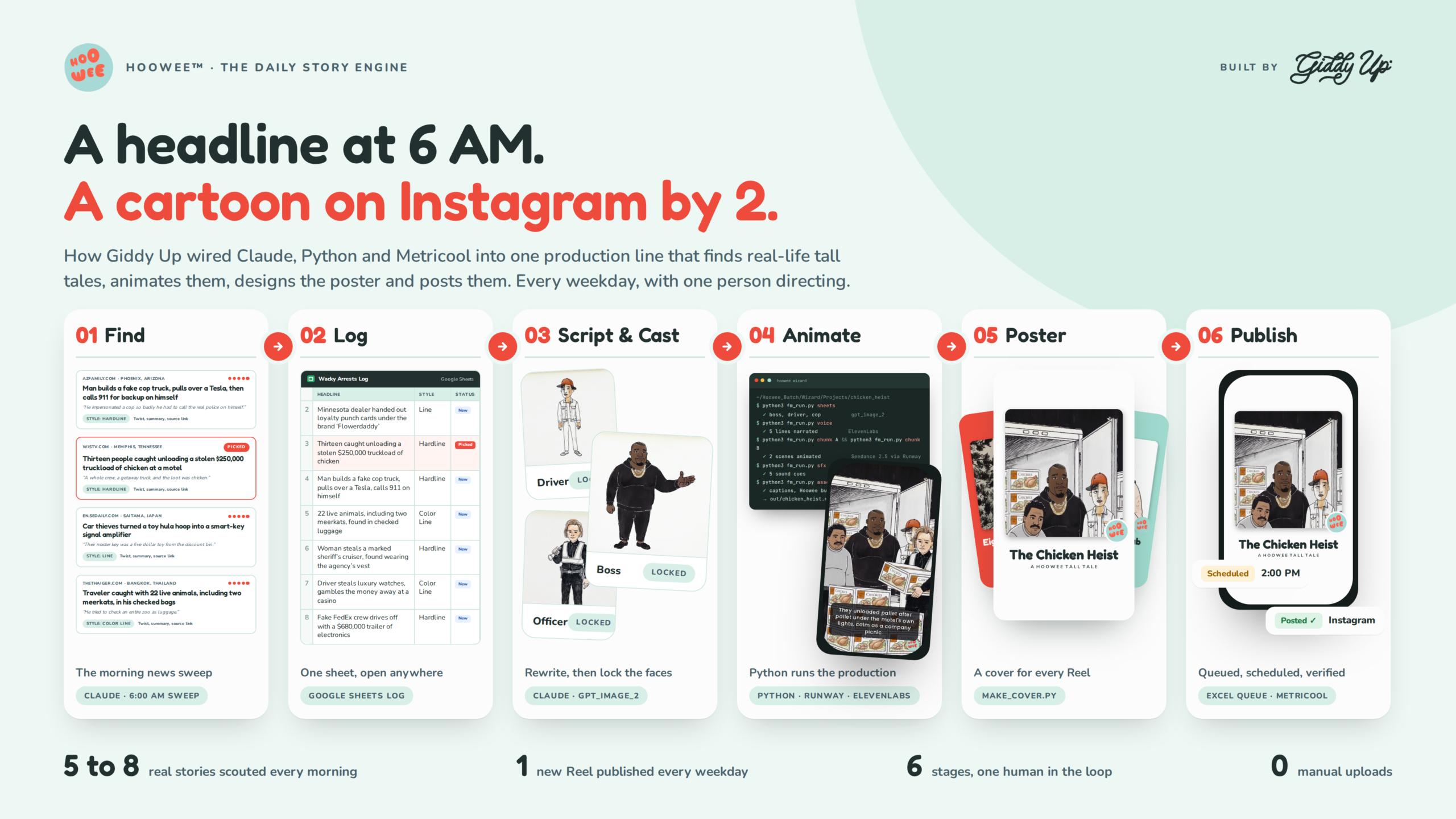
A media brand built from scratch: short animated tall tales, a library of forty-plus episodes, and a production pipeline that turns a told story into a finished animation.
This is the working part of the conversation. Six areas where we usually find room, and for each one we want to hear who touches it today and where it stalls. We'll identify the highest-value workflows, then determine which one should become the first pilot.
Deadline-driven and billable-adjacent. A repeatable shell that stands up the next submittal in hours, built from your own approved source library.
A playbook, a template library and a single review gate turn a weekly scramble into a routine. The open question is upstream: how much of drafting and templating can run on rails before a person touches it.
Support around the design work, never the design itself. Project narratives, tagged and searchable imagery, first-pass diagram cleanup.
The recurring "we need it by Friday" requests, plus the two that never get a Friday: a news cadence and search visibility. A project page format that populates from the same source as the proposal sheets.
Tools the studio uses on itself. Early site reads, project tracking that fills itself in, and a lighter way to run reviews. The "other" is the interesting column.
Something you put in front of your industry rather than use behind the desk. A tool that makes your thinking visible, earns attention, and gives clients a reason to call.
Client information and project files stay in tools you control. Nothing confidential goes into a system you have not approved.
Anything AI-assisted that goes public passes through the review and authorization you already use. Draft until you say otherwise.
The goal is that the team runs most of this without us. Every build comes with furthering your AI knowledge, not just the what.
We work around the design process: narratives, research, retrieval, cleanup. The design decisions stay yours.
Begin with one focused three-month sprint. Together, we'll decide which workflow offers the clearest opportunity to save time and improve how the team works.
Create a faster, more consistent process for developing, reviewing, delivering, and tracking responses.
Improve how candidates are identified, evaluated, communicated with, and moved through the hiring process.
Streamline the research, information gathering, asset retrieval, narrative development, and production work surrounding the design process.
Start with a workflow or recurring challenge identified by your team during the first 30 days of the engagement.
Document the current process, the people involved, the tools and source materials being used, and where work slows down or gets repeated. Then define the system requirements and how success will be measured.
Build the working system around a real project or active need. Test it with the team, refine it based on actual use, establish the necessary review controls, and prepare the team to use it in day-to-day work.
One priority. One working system. Built around the way you and your team actually operate.